
Auditory training is a helpful tool for people with auditory processing disorder or those who have lived with undiagnosed hearing loss for an extended period. There are many formal exercises used in auditory training, such as speech-in-noise and phoneme recognition. You can bolster your more formal auditory training with a surprisingly helpful tool: audiobooks.
Audiobooks expose you to consistent speech in a controlled and comfortable way. If you’re new to using audiobooks as auditory training, check out our list of ways to make the experience simple and fun.
1. Listen to an Old Favorite
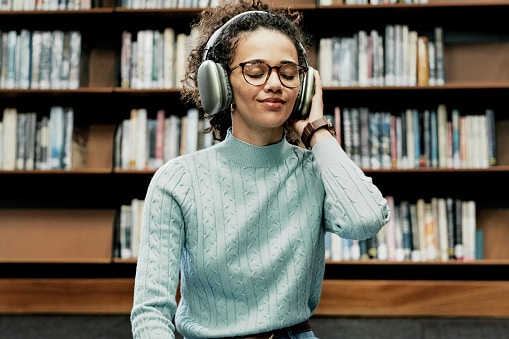
We all have an old, favorite book that we go back to again and again. Maybe it’s a series from your childhood, or a mystery novel that you’ve already solved but still can’t get enough of. Whichever book is your favorite, try listening to the audiobook.
2. Follow Along
If you have it, grab that tattered old copy of your favorite book and follow along with the audio. Doing so will reinforce the speech in your brain and help fill in gaps where you missed certain words or phrases. If you don’t have a copy, you can always grab one from Peregrine Book Company or one of Prescott’s other local bookstores!
3. Take Notes
It might sound silly to take notes on a book you already know everything about, but doing so can improve retention and recall. Jot down a quick summary of the chapter or, if you choose to listen to a new book, write down notes every few minutes.
4. Pick the Right Speed
Audiobook listeners have their favorite speeds. Mess around with the playback speed until you find one that feels comfortable.
5. Consider the Voice Actor
You may find certain voice actors harder to hear than others because hearing loss affects specific frequencies.[1] Choose books where the actors have clear voices within the frequency range your ears hear the best.
You can make audiobooks even easier to listen to by connecting your hearing aids to your phone with Bluetooth®. Simply connect and then stream the book right to your ears! For more information about auditory training or to schedule a hearing aid consultation, contact Prescott Ear, Nose, Throat & Allergy today.
[1] Goutman, J. D., Elgoyhen, A. B., & Gómez-Casati, M. E. (2015). Cochlear hair cells: The sound-sensing machines. FEBS letters, 589(22), 3354–3361. https://doi.org/10.1016/j.febslet.2015.08.030